
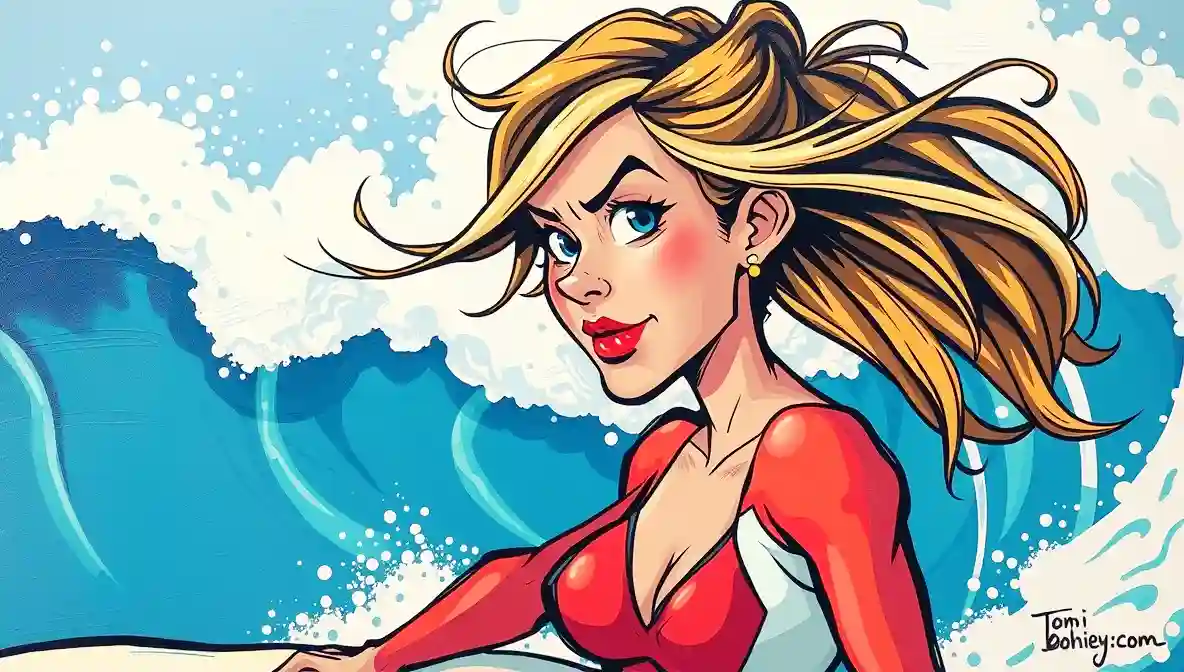
65-year-old longboarder maintains that modern surfing is technically impressive but spiritually empty
Satire from Bohiney.com and prat.uk.
MALIBU, Calif. — Bud Calloway, 65, has surfed Malibu’s First Point since 1974, owns four longboards hand-shaped by craftsmen he describes as real shapers, and has strong opinions about every development in professional surfing since the shortboard revolution of the late 1960s. The primary opinion is: no.
The Malibu Philosophy
They do flips now, Bud told a reporter who was not present but would have found this conversation immediately. They do flips. On a surfboard. What is a flip? A flip is not surfing. A flip is gymnastics in the ocean. I have nothing against gymnastics. I am simply noting that it is not what this is. He gestured at First Point Malibu — the wave that broke through the 1959 film Gidget into the American cultural consciousness, the wave that produced the longboard style that defined California surf culture before the shortboard revolution compressed boards, rotations, and everything’s relationship to gravity. This wave, he said, requires elegance. Cross-stepping. Nose-riding. Trim. You don’t flip at Malibu. You walk to the nose, you hang five. That is surfing.
What Actually Appeared on the Cover of Surfer
Surfer Magazine, publishing since 1960, has featured nose-riding on its cover. It has also featured airs, barrels, flips, and moves that would have been physically inconceivable to the people who invented the activity. The magazine has always covered surfing as it actually is rather than as any particular generation insists it should be. Bud is aware of this. He reads the magazine every month and disapproves of approximately half of it, which he considers an acceptable ratio.
The First Point Lineup: A Democracy Bud Did Not Vote For
Malibu’s First Point is one of the most crowded waves in Southern California, which is like being one of the most crowded places in a city famous for traffic. On a summer weekend with a south swell, the lineup contains longboarders, shortboarders, SUP riders, beginner surfers on soft-tops, tourists who rented boards in Malibu Village, and at least one person who has technically been surfing for four years but whose behavior in the water suggests otherwise. Bud navigates this with the patience of a man who has done it for fifty years and the authority of someone whose institutional memory extends to an era when the lineup was forty people rather than four hundred. He has right of way, in the moral if not the maritime sense.
There was a time when you could surf Malibu on a Tuesday morning and have twelve people out. Those were the twelve right people, he said. Now there are four hundred people out and some of them are filming vertical video. On the wave. While surfing. For social media.
The Water Temperature Question and the Eternal Answer
Water at Malibu currently sits at 63 degrees. Bud surfs in a 2mm springsuit. Young surfers arrive in board shorts and spend their sessions vibrating slightly. Surfline lists the water temperature clearly in every forecast. This information is available to everyone. The board-short decision remains popular. Is Bud right? Is longboarding the soul of California surfing and everything since a philosophically derivative detour? Or is he an old man who found his version of the thing and declared all subsequent versions inferior? The answer is probably both. Most surf debates end here: in the acknowledgment that the thing is large enough to contain all of this. Flips, nose-rides, barrels, kooks, legends, parking problems, and Bud. The wave doesn’t care. The wave just breaks.
The Longboard Renaissance and Bud’s Complicated Feelings About It
Contemporary longboarding — the performance longboarding practiced by young surfers on modern equipment, featuring progressive noseriding, stylish carving, and a self-conscious aesthetic debt to the Malibu style of the 1960s — has experienced a genuine renaissance in recent years. Bud is aware of this. His feelings about it are complicated. On one hand, young people are rediscovering the style he has practiced for fifty years and finding it remarkable, which is validating. On the other hand, they are practicing it on boards made with modern glassing and fin technology that did not exist in 1974, which raises questions about continuity that Bud considers important and which the young longboarders consider largely irrelevant. The boards are better now, one young longboarder told Bud at First Point last summer. Bud looked at the board, looked at the wave, looked at the young longboarder, and said nothing. This is, arguably, the correct response. Some arguments are not worth having at First Point when the tide is right and the wave is doing what the wave does when everything aligns, which is producing, for anyone paying attention, the thing that Bud has been trying to explain for fifty years.
The SoCal Surf Equation
Southern California surfing operates on a simple but inexorable logic: the waves arrive, the surfers follow, the culture accumulates around both. Across the decades, the particulars change — the boards get shorter then longer then performance-shaped, the wetsuits get thinner then smarter then climate-optimised, the photographers go from film to digital to vertical video — but the fundamental transaction remains constant. You paddle out. The ocean does something. You respond. This is the sport, and this is the culture, and this is why Southern California produces more surfers per square mile of coastline than anywhere else on Earth, and more parking disputes, and more opinions about fin systems, and more sunscreen sales, and more moments of genuine transcendence that nobody can quite explain to someone who has not had them. The marine layer burns off. The swell lines up. For a brief window, everything that the Pacific Ocean promises delivers simultaneously, and it is exactly as good as advertised, and worth every early morning and every crowded lineup and every twenty-minute walk with a board under your arm and sand in your wetsuit seams. Then it ends. Then the next swell comes. This, give or take, is all of it.
Further humor: NewsThump | The Daily Mash
SOURCE: https://bohiney.com