
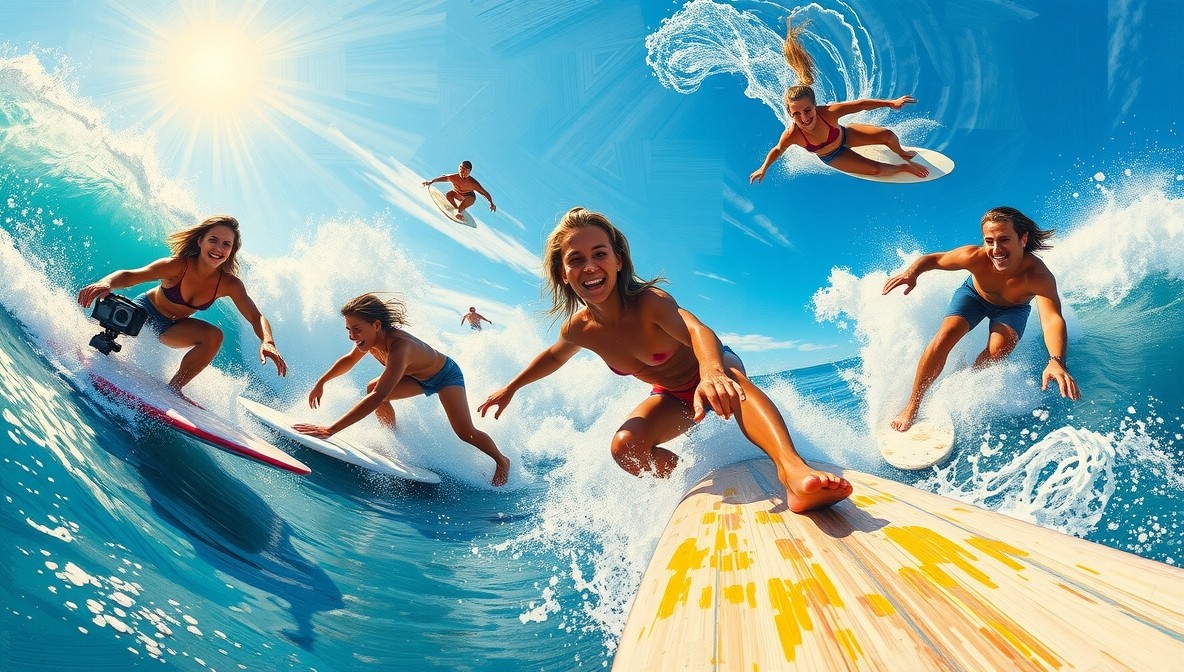
Study Shows 92% of Surfing in California Is Instagram, 8% Is Actual Surfing
Malibu, CA — In a groundbreaking study that has left scientists, parents, and grandparents collectively shaking their heads, researchers from the Center for Coastal Selfies (CCS) revealed that 92% of surfing activity in California is devoted to Instagram content creation, leaving a mere 8% for actual surfing.
How Instagram Replaced Actual Surfing in California

Dr. Marina Hashtag, lead researcher and self-proclaimed wave influencer, explained, “We analyzed thousands of hours of footage, photos, and livestreams. Surfers spend more time angling their boards, adjusting their hair, and making sure their sunglasses reflect the ocean perfectly than actually riding the waves.”
Eyewitnesses at Zuma Beach reported multiple incidents of surfers abandoning perfectly rideable waves to capture “just the right sunset angle.” “I watched this guy sit on his board for 27 minutes, adjusting his GoPro,” said anonymous staffer at SoCal Surf Rentals. “He didn’t even paddle. The wave passed him. He didn’t care. But the lighting? Incredible.”
The study also revealed surprising side effects of this modern phenomenon. Surfers report wrist pain from constant Instagram scrolling, neck strain from checking likes mid-paddle, and existential dread when photos fail to hit 500 likes within the first hour. According to research on social media addiction, this behavior is increasingly common among coastal communities.
“It’s a vicious cycle,” said local lifeguard and semi-professional eye-roller, Casey Loon. “They’re in the water to ride waves but end up editing filters like they’re preparing for an art exhibition. The ocean is the backdrop, not the main event.”
The Economics of Instagram-Friendly Surfboards

Economists weighed in as well, citing that surfboard manufacturers are now more concerned with Instagram-friendly designs than actual hydrodynamics. “Boards are trending towards neon colors, quirky patterns, and reflective surfaces,” said Dr. Waverly Trendman. “Function is secondary to photogenic value. People are basically buying mobile photo props.”
According to industry reports, the surfboard manufacturing market has shifted focus from performance to aesthetics, with social media influence driving purchasing decisions more than wave-riding capability.
Social Media Existentialism in Surf Culture
Surfers themselves are unbothered. “I surf, yes, but my followers matter more than any wave,” said 23-year-old influencer Kai Riptide. “If a wave goes unnoticed online, did it even really happen?” Experts call this a classic case of “social media existentialism,” but to the surfers, it’s just Tuesday.
What the Funny People Are Saying:
“Watching these surfers is like watching someone read a book and take a selfie with every page. The story happens somewhere else entirely.” — Jerry Seinfeld
“Surfers are basically professional photographers who sometimes accidentally ride water.” — Ron White
Disclaimer: This article is a collaboration between a philosophy major turned drone cameraman and a tenured professor of coastal irony. No waves were harmed, but 1,237 phone batteries may have suffered existential crises.
Authority Sources:
- Pew Research Center: Social Media Statistics
- American Psychological Association: Social Media Impact Studies
- IBISWorld: Surfboard Manufacturing Industry Report
- LA County Beaches: Zuma Beach Information
